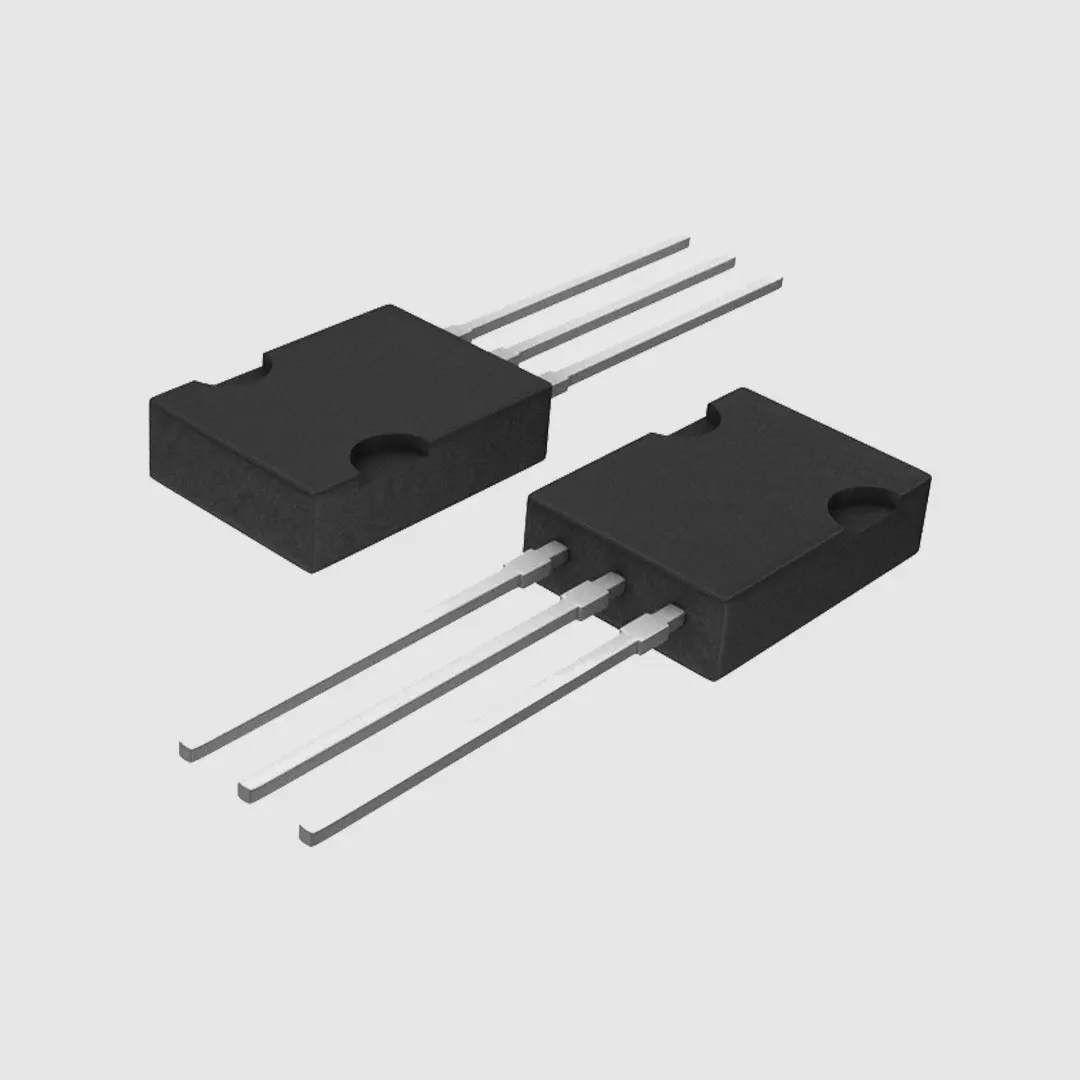
BT134 and BT136 show key differences in current rating, package size, and gate sensitivity. BT134 supports lower current and comes in a smaller package, making it ideal for compact designs and sensitive triggering. The BT134 pinout often matches the needs of low-power control circuits. Engineers choose BT134 for applications that demand precise triac operation, while BT136 fits higher power needs. Understanding these differences helps select the right triac for each application.
Choosing between BT134 and BT136 ensures reliable and efficient circuit performance.
Key Takeaways
-
BT134 suits compact, low-power circuits with a sensitive gate that triggers easily using low current.
-
BT136 handles higher current and heat with a larger package, making it ideal for high-power applications.
-
Both triacs share the same pinout and voltage ratings, simplifying design and possible substitutions.
-
Choose BT134 for precise control and space-saving designs; pick BT136 for durability and heavy loads.
-
Always check datasheets and current ratings before selecting or replacing these triacs in your projects.
Quick Comparison
Key Differences
The bt134 series and bt136 both belong to the family of triac devices, but they serve different needs in electronic circuits. The bt134 series stands out for its lower current rating and compact TO-92 package. This makes the bt134 series a popular choice for designs where space is limited and heat dissipation is less of a concern. The bt134 series also features a sensitive gate, which allows it to trigger easily with low gate current. This characteristic makes the bt134 series ideal for low-power switching and precise control in phase control applications.
On the other hand, bt136 offers a higher current rating and comes in a larger TO-220 package. This design allows bt136 to handle more power and operate in circuits that require higher loads. However, the gate sensitivity of bt136 is lower than that of the bt134 series, so it needs a stronger trigger signal. Engineers often select the bt134 series for small appliances, dimmers, and control circuits where efficiency and compactness matter most. The bt134 series also works well in circuits that need reliable operation with minimal gate drive.
Note: The bt134 series provides excellent performance in sensitive control circuits, while bt136 suits high-power switching tasks.
Comparison Table
| Feature | BT134 Series | BT136 |
|---|---|---|
| Package Type | TO-92 | TO-220 |
| Maximum Current | 4A | 4A or 6A |
| Gate Trigger Current | 5-10 mA (Sensitive) | 10-25 mA |
| Voltage Rating | 400V, 600V, 800V | 400V, 600V, 800V |
| Gate Sensitivity | High | Moderate |
| Typical Use | Low-power switching, precise phase control applications | High-power switching |
| Application Suitability | Compact, sensitive circuits | Power circuits |
| Heat Dissipation | Lower | Higher |
The bt134 series remains a top choice for engineers who need a triac that fits into small spaces and responds to low gate currents. The bt134 series also excels in circuits that require accurate phase control. In contrast, bt136 handles higher power and fits best in circuits where space is less of a concern. Both devices share similar voltage ratings, but their differences in gate sensitivity and package size set them apart for specific uses.
Pinout Details
BT134 pinout
The bt134 pinout plays a crucial role in circuit design. This triac uses a TO-92 package, which is compact and easy to handle. The bt134 pinout consists of three main pins. Each pin serves a specific function in the operation of the device. The arrangement of the pins helps engineers connect the triac correctly on a printed circuit board.
| | | | | |
| Pin Number | Symbol | Description |
|---|---|---|
| 1 | T1 | Main Terminal 1 |
| 2 | T2 | Main Terminal 2 |
| 3 | G | Gate |
The mounting base of the bt134 connects to Main Terminal 2 (T2). This connection ensures proper heat dissipation and electrical performance. The bt134 pinout allows for straightforward integration into low-power switching circuits. Designers often use the bt134 pinout in compact control boards, where space and precision matter. The clear labeling of each pin reduces the risk of wiring errors.
Tip: Always double-check the bt134 pinout before soldering to avoid damaging the triac or the circuit.
BT136 Pinout
The bt136 uses a TO-220 package, which is larger than the TO-92 package of the bt134. This package supports higher current flow and better heat management. The pin configuration of the bt136 follows a similar pattern to the bt134 pinout. The three pins on the bt136 include Main Terminal 1 (T1), Main Terminal 2 (T2), and the Gate (G).
| Pin Number | Symbol | Description |
|---|---|---|
| 1 | T1 | Main Terminal 1 |
| 2 | T2 | Main Terminal 2 |
| 3 | G | Gate |
The mounting base of the bt136 also connects to Main Terminal 2 (T2). This design helps with heat dissipation during high-power operation. The clear pin arrangement makes it easier for engineers to use the bt136 in power control circuits. The larger package size provides extra durability and reliability in demanding applications.
Pinout Similarities
Both the bt134 pinout and the bt136 pinout share a common structure. Each device features three pins: T1, T2, and G. The mounting base connects to T2 in both cases. This similarity allows engineers to switch between these triacs in some designs without changing the printed circuit board layout. The consistent pin arrangement simplifies the design process and reduces confusion.
-
Both triacs use the following pinout:
-
Pin 1: Main Terminal 1 (T1)
-
Pin 2: Main Terminal 2 (T2)
-
Pin 3: Gate (G)
-
Mounting base: Connected to T2
-
The symbolic diagrams, PCB footprints, and 3D models available for both devices confirm this pin arrangement. These resources help designers visualize the correct placement of each pin. The bt134 pinout stands out for its use in compact, sensitive circuits, while the bt136 pinout fits high-power applications. Despite differences in package size and current rating, the pinout structure remains consistent.
Note: The shared pinout structure between bt134 and bt136 makes it easier to upgrade or modify circuits as needed.
Datasheet Specs
BT134 Specs
The bt134 series stands out for its compact size and sensitive gate. This triac uses a TO-92 package, which makes it suitable for small circuit boards. The bt134 series supports a maximum RMS on-state current of 4A. Its gate trigger current ranges from 5mA to 10mA, which means it can operate with low control signals. The bt134 series offers voltage ratings of 400V, 600V, and 800V. These features make the bt134 series a good choice for low-power switching and phase control.
Key specifications of the bt134 series:
-
Package: TO-92
-
Maximum RMS On-State Current: 4A
-
Gate Trigger Current: 5-10mA
-
Voltage Ratings: 400V, 600V, 800V
-
Holding Current: 2.2mA (typical)
-
Sensitive gate for easy triggering
The bt134 series works well in circuits that require precise control and low gate drive.
BT136 Specs
The bt136 offers higher power handling in a larger TO-220 package. This triac can handle a maximum RMS on-state current of 4A or 6A, depending on the model. The gate trigger current for the bt136 ranges from 10mA to 25mA. Voltage ratings are similar to the bt134 series, with options for 400V, 600V, and 800V. The bt136 provides better heat dissipation because of its larger package.
Main specifications of the bt136:
-
Package: TO-220
-
Maximum RMS On-State Current: 4A or 6A
-
Gate Trigger Current: 10-25mA
-
Voltage Ratings: 400V, 600V, 800V
-
Holding Current: 2.2mA (typical)
-
Robust design for higher loads
Specs Comparison
The table below highlights the main differences between the bt134 series and bt136:
| Specification | BT134 Series | BT136 |
|---|---|---|
| Package | TO-92 | TO-220 |
| Max RMS On-State Current | 4A | 4A or 6A |
| Gate Trigger Current | 5-10mA | 10-25mA |
| Voltage Ratings | 400V/600V/800V | 400V/600V/800V |
| Gate Sensitivity | High | Moderate |
| Heat Dissipation | Lower | Higher |
The bt134 series provides high gate sensitivity and fits compact designs. The bt136 handles more power and suits applications that need better heat management. Both triac types share similar voltage ratings, but their current and package differences guide engineers in choosing the right device.
Features
Sensitive Gate (BT134)
The bt134 stands out for its sensitive gate feature. This triac responds to low gate trigger currents, usually between 5 and 10 milliamps. Engineers often select the bt134 for circuits that require precise control. The sensitive gate allows the device to switch on with a small input signal. This feature makes the bt134 ideal for low-power applications, such as light dimmers and small motor controllers.
-
Advantages of a sensitive gate in bt134:
-
Enables use in microcontroller-based circuits
-
Reduces the need for large gate drive circuits
-
Improves efficiency in phase control systems
-
The bt134 also helps designers save space. Its compact TO-92 package fits easily into small circuit boards. The sensitive gate ensures reliable operation, even when the control signal is weak. Many engineers prefer the bt134 when they need accurate switching and minimal power loss.
Tip: The sensitive gate in bt134 makes it a strong choice for projects that use low-voltage logic signals.
Power Handling (BT136)
The BT136 excels in power handling. This triac can manage higher currents, supporting up to 4 or 6 amps depending on the model. Its robust TO-220 package helps dissipate heat efficiently, which is important in high-power circuits. The BT136 often appears in applications like heater controls, large motor drivers, and industrial switching.
A study tested the BT136's reliability under extreme heat. Researchers placed 200 samples on a hot plate covered with sand and increased the temperature above the datasheet range. They measured how long each device lasted and how many failed. The results showed that the BT136 maintained strong performance, even at temperatures up to 130°C. This test confirmed the BT136's ability to handle tough conditions and high power loads.
-
Key benefits of BT136’s power handling:
-
Reliable operation in demanding environments
-
Suitable for circuits with high current requirements
-
Enhanced durability due to strong thermal management
-
Note: The BT136’s power handling makes it a preferred option for engineers building circuits that need to switch or control large electrical loads.
Equivalents
BT134 Equivalents
The bt134 series often appears in low-power switching circuits. Engineers sometimes need alternatives when the bt134 series is unavailable or when they want to compare performance. Several triacs can serve as direct replacements for the bt134 series. These equivalents match the main features, such as current rating, voltage rating, and gate sensitivity.
Common equivalents for the bt134 series include:
-
Z0103MN: This triac offers similar current and voltage ratings. It also features a sensitive gate, which makes it suitable for the same types of control circuits.
-
MAC97A6: Many designers use this triac in compact boards. It provides a comparable current rating and works well in phase control applications.
-
BTA06-600S: This device supports similar voltage levels and can replace the bt134 series in some designs.
Tip: Always check the datasheet for each equivalent to confirm pinout and electrical characteristics before making a substitution.
The bt134 series stands out for its sensitive gate and compact TO-92 package. When selecting an equivalent, engineers should ensure the replacement matches these features.
BT136 Equivalents
The bt136 handles higher power and often appears in circuits that control larger loads. When engineers need a substitute for the bt136, they look for triacs with similar current and voltage ratings, as well as a robust TO-220 package.
Popular equivalents for the bt136 include:
-
BTA12-600B: This triac supports higher current and voltage ratings. It fits well in power control circuits that require durability.
-
MAC6-6: This device offers similar performance and can replace the bt136 in many high-power applications.
-
Q4015LT: Engineers use this triac for its strong power handling and reliable operation in demanding environments.
A table below summarizes the main equivalents for both triacs:
| Original Triac | Equivalent 1 | Equivalent 2 | Equivalent 3 |
|---|---|---|---|
| bt134 series | Z0103MN | MAC97A6 | BTA06-600S |
| BT136 | BTA12-600B | MAC6-6 | Q4015LT |
Note: Always verify the maximum ratings and pin configuration before replacing a triac in a circuit.
Applications
BT134 Uses
Engineers often select the bt134 for circuits that require sensitive switching. This triac works well in low-power devices. Many designers use the bt134 in light dimmers, fan speed controllers, and small motor drivers. The sensitive gate allows the bt134 to operate with low trigger currents. This feature makes it suitable for microcontroller-based projects. The compact TO-92 package fits easily into tight spaces on printed circuit boards.
Common uses for the bt134 include:
-
Electronic light dimmers for home lighting
-
Speed control in small fans or pumps
-
Timer circuits in home appliances
-
Low-power switching in phase control applications
-
Touch-sensitive switches
The bt134 provides reliable performance in circuits that need precise control and low power consumption.
BT136 Uses
The bt136 handles higher current loads. Engineers choose this triac for power circuits in larger appliances. The robust TO-220 package helps with heat dissipation. The bt136 often appears in heater controls, washing machines, and industrial equipment. This triac can switch larger motors and resistive loads without overheating.
Typical applications for the bt136 include:
-
Power control in home appliances such as washing machines and heaters
-
Industrial motor drivers
-
High-power light dimmers
-
Solid-state relays for switching heavy loads
-
Temperature control systems
The bt136 offers strong performance in demanding environments where durability and power handling matter.
Selection Tips
Choosing between bt134 and bt136 depends on the specific application. For circuits that need sensitive triggering and compact size, the bt134 is the better choice. It fits well in low-power and precise phase control applications. For circuits that require higher current and better heat management, the bt136 is more suitable. Always check the current rating and package size before making a selection.
| Requirement | Choose bt134 | Choose bt136 |
|---|---|---|
| Low power, sensitive gate | ✅ | |
| High current, robust build | ✅ | |
| Compact design | ✅ | |
| Large appliances | ✅ |
Tip: Review the datasheet for each triac to match the device to your project’s needs.
BT134 and BT136 share similar voltage ratings and pinouts, but they differ in current rating, package size, and gate sensitivity. BT134 fits compact, low-power circuits, while BT136 handles higher loads. To choose the right triac, engineers can follow a clear decision process:
-
Identify the required current and package size.
-
Compare gate sensitivity needs.
-
Review datasheets for exact specifications.
-
Map options using a simple flowchart to clarify choices.
Using visual tools like flowcharts helps engineers make confident, well-structured decisions for their projects.
FAQ
What is the main difference between BT134 and BT136?
BT134 has a lower current rating and a more sensitive gate. BT136 can handle higher currents and comes in a larger package. BT134 works best in compact, low-power circuits. BT136 suits high-power applications.
Can BT134 and BT136 be used interchangeably?
Engineers sometimes swap these triacs if the circuit requirements match. Both share similar pinouts and voltage ratings. However, BT136 handles more current. Always check the current rating and package size before replacing one with the other.
Why does gate sensitivity matter in triacs?
Gate sensitivity affects how easily a triac turns on. A sensitive gate, like in BT134, allows control with a small trigger current. This feature helps in circuits with weak control signals or microcontrollers.
Which triac is better for microcontroller projects?
BT134 works better for microcontroller projects. Its sensitive gate needs less current to trigger. This feature matches the low output of most microcontrollers. BT136 usually needs a stronger trigger signal.
Do both triacs support the same voltage ratings?
Yes, both BT134 and BT136 offer similar voltage ratings. Common options include 400V, 600V, and 800V. Always check the datasheet for the exact model to confirm the voltage rating.
Written by Jack from AIChipLink.
AIChipLink, one of the fastest-growing global independent electronic components distributors in the world, offers millions of products from thousands of manufacturers, and many of our in-stock parts is available to ship same day.
We mainly source and distribute integrated circuit (IC) products of brands such as Broadcom, Microchip, Texas Instruments, Infineon, NXP, Analog Devices, Qualcomm, Intel, etc., which are widely used in communication & network, telecom, industrial control, new energy and automotive electronics.
Empowered by AI, Linked to the Future. Get started on AIChipLink.com and submit your RFQ online today!


